PPWR 2026: What the New EU Packaging Regulation Means for Your Business
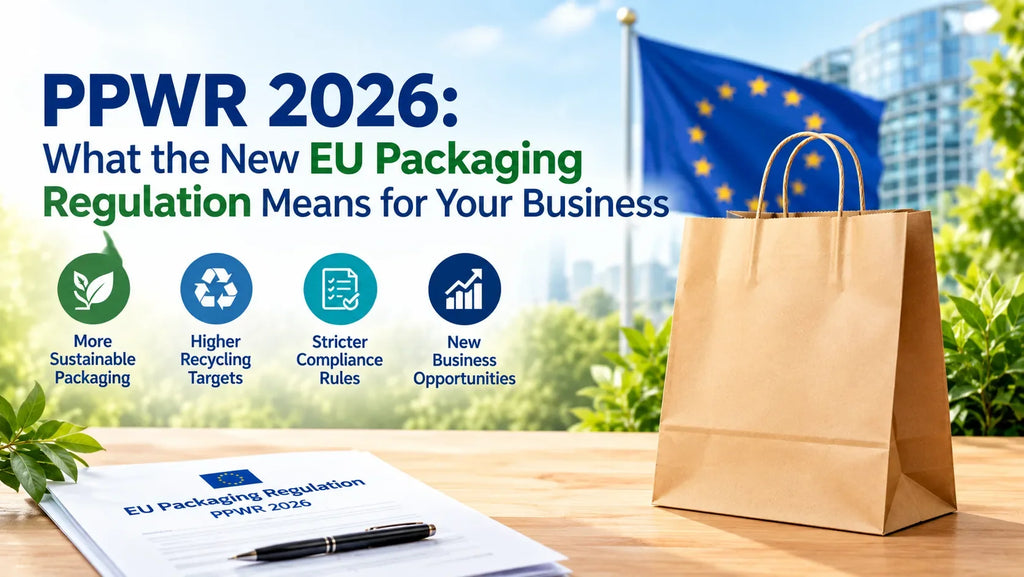
PPWR 2026: What the New EU Packaging Regulation Means for Your Business
PPWR (Packaging and Packaging Waste Regulation) is the new packaging law of the EU that will start applying gradually from 2026 and will replace the 1994 Directive for Packaging Waste. Since it's a regulation, these are immediately applicable in every member country without any local adaptation. If you're a company producing, importing, selling, or shipping packaged products to the EU, these regulatory requirements have direct impacts on you. Let's look at what's different and how to adjust in time.
What is the PPWR regulation?

The EU's Packaging and Packaging Waste Regulation is a single, unified law that harmonizes the rules for packaging design, labelling, reuse, and recycling. The previous legislation, which was essentially interpreted in different ways by each EU country, will apply uniformly across the 27 EU member states. Its main objectives are to reduce packaging waste, make all packaging recyclable, and guide the market towards a circular economy. Simply put: a consistent rulebook, no patches anymore.
When does PPWR come into effect?
The main body of PPWR 2026 starts to apply from August 2026, with stricter obligations phasing in over the following years.
|
Milestone |
Approximate timing |
|
Regulation starts to apply |
August 2026 |
|
Recyclability design rules |
From 2030 |
|
Minimum recycled content in plastic |
From 2030 |
|
Reuse and refill targets |
Staged to 2030 and 2040 |
Who does PPWR apply to?
PPWR is applicable to all economic operators who place packaging on the EU market: manufacturers, importers, brand owners, distributors, retailers, and e-commerce sellers. Importantly, this regulation will cover the businesses situated outside of the EU that sell to the EU. If your product is delivered within packaging that is a box, a pouch, a wrapper, etc. to an EU customer, then your activity is covered.
Key requirements of PPWR 2026
The regulation sets forth a number of fundamental requirements:
· Design for recycling—all packaging must be recyclable and satisfy the specified quality standards.
· Minimum amount of recycled content—plastic packaging uses a certain amount of recycled material.
· Packaging minimisation—space and excessive layers are limited; excessive packaging is reduced.
· Reuse and refill goals—some industries are obligated to provide reusable or refillable options.
· Single-use restrictions—many single-use containers must be either restricted or completely banned.
· Industry labels and EPR—standardised labels indicating if products are recyclable and companies needing to pay fees when their packaging isn’t.
In combination, these result in a strong emphasis placed on design for recycling, recycled content, and circular-economy principles in the choice of packaging.
What does PPWR mean for your business?

Your industry decides the impact. An e-commerce seller may have to cut empty space and rethink oversized boxes and void fill. Rbrands. Cycling content standards, reuse targets, and food safety restrictions affect food and beverage brands. Retailers and manufacturers should check all of their SKUs's packaging against sustainability standards and get ready for EPR (Extended Producer Responsibility) reporting. For all three sectors, the idea is the same—lighter packaging, easy-to-recycle ones, and reusable ones—with papers to certify them.
How to prepare for PPWR compliance
1. Examine the existing range of packaging in light of the new regulations.
2. Evaluate usability and determine formats that may not meet the design criteria.
3. Change the materials used to recyclable, recycled, or reusable choices.
4. Amend the label to comply with the EU's harmonisation rules.
5. Plan and allocate money for extended producer responsibility.
Here is how Verpackart comes to the rescue. We provide eco-friendly, recyclable packaging that is compliant with the Prospective Packaging Waste Regulation (PPWR), i.e., recyclable and recycled materials, as well as designs that enable you to reduce wasted space and add options for reuse of packaging.
Frequently asked questions
1. Is PPWR a regulation or a directive?
PPWR is a regulation, which means it is applicable directly and uniformly within all EU countries without any national law.
2. Does non-EU business have to comply with PPWR?
Yes. Companies importing packaged products to the EU have to comply with it regardless of their location.
3. What kinds of packaging are banned and restricted by PPWR?
Some single-use packaging as well as packaging that increases the available volume without any content will be banned and restricted.
4. Which regulations apply to recycled content and when?
Regulations that will require the use of recycled material and the packaging's recyclability will only be put into practice around 2030.
Conclusion
PPWR 2026 is the biggest change to EU packaging rules in a generation that is binding, covering the entire EU, and revolves around recyclability, recycled content, and reuse. Early auditors and packaging switchers will be the only businesses to have an advantage and prevent any kind of problems.
Ready for PPWR? Connect with Verpackart today and explore sustainable, recyclable packaging solutions for 2026 and beyond.
Related post
17
Oct
12
Oct
06
Oct

29
Sep
RECENT POSTS
17.October.2026
Christmas Packaging Ideas for Small Businesses: Paper Bags, Gift Packaging & Bulk Buying Tips
0 Comments
12.October.2026
Wholesale Paper Bags: Prices, Minimum Order Quantities, and How to Choose a Supplier
0 Comments
06.October.2026
What Is the Best Packaging for Small Businesses? 10 Cost-Effective Options Compared
0 Comments
29.September.2026
How to Choose the Right Packaging for Your E-commerce Business: A Complete Guide
0 Comments