Paper Bags vs. Plastic Bags: Which Packaging Is Actually More Sustainable?
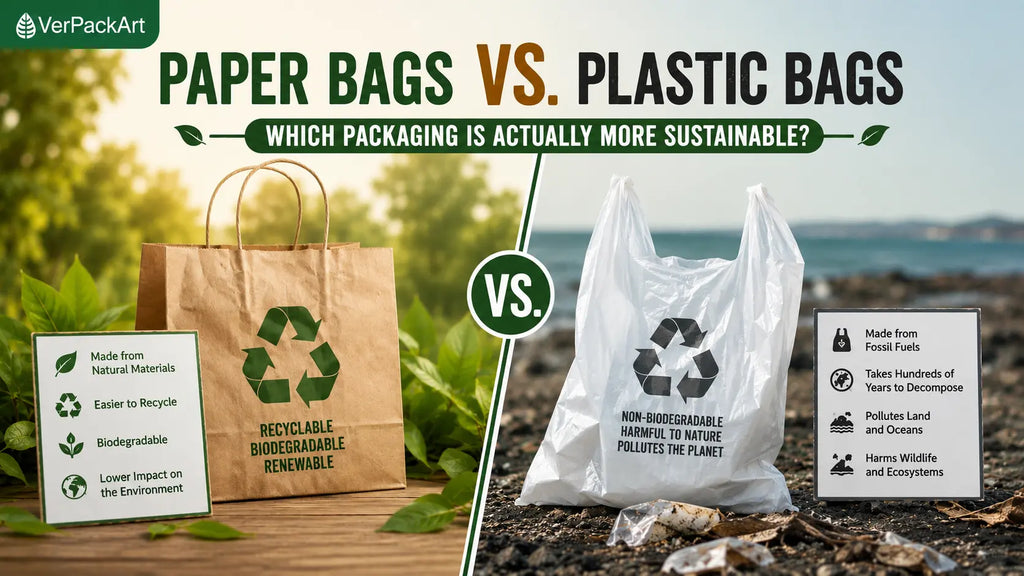
Paper bags are better regarding biodegradability and ease of recycling, but plastic bags have a lower carbon footprint in the production stage. In most cases concerning retail or shipping, paper is more environmentally friendly than plastic, but depending on the circumstance, one may still prefer plastic. That is why Verpackart offers kraft paper carry bags and poly mailers for companies seeking versatility.
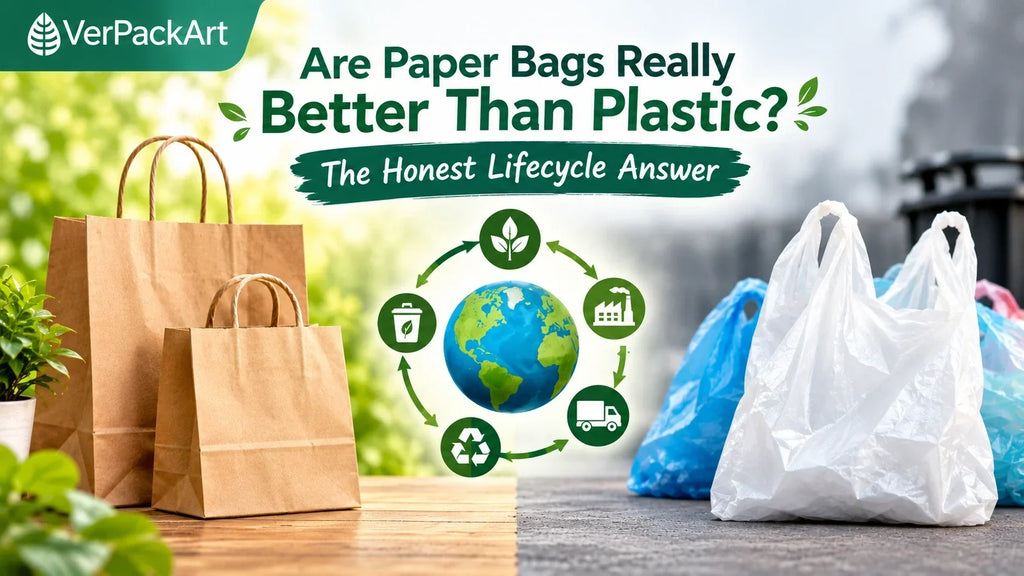
If you own a business, then you must have faced this dilemma during making your packaging choice: paper bags vs. plastic bags—which is better for our planet? Actually, the right answer is that both have advantages and disadvantages. However, if you consider the whole lifecycle—production, disposal, and recycling rates—paper bags win almost all the time.
What's the Real Environmental Impact of Paper vs. Plastic Bags?

Paper bags are derived from wood pulp, which is a sustainable material, whereas plastic bags are produced from petroleum. While the initial processes for producing paper bags do use more water and energy, thereby increasing the carbon footprint and production emission amounts, producing paper bags is still the greener option. Nonetheless, what happens after the bag leaves the store is equally as important in determining the environmental impact of paper vs. plastic bags.
Production & Carbon Footprint: The production of plastic bags and mailers is cost-effective and takes less energy than other types of bags, so they’re helpful in moving products. Paper bags may be costlier to produce, but they are not as damaging to the environment in the long run, unlike plastic bags.
Which Bag Decomposes Faster — Paper or Plastic?
Paper bags vanish in a few weeks in the right conditions. But plastic bags and poly mailers can take between 400 and 1,000 years to decompose fully and, even then, turn into microplastic contaminants in soil, oceans, and food systems.
In the wider context of the environmental impact of paper vs. plastic bags, this figure is one of the clearest statistics available, indicating the similar argument of biodegradable packaging paper against plastic.
Are Paper Bags More Recyclable Than Plastic Bags?
Yes. Are paper bags recyclable? — Almost inevitably, through traditional household recycling modes allowed all over Europe. Plastic mailers need special drop-off locations, and a large percentage of them are not recycled at all.
When comparing paper bag vs. plastic bag recycling, it is important to know that paper fibers can be recycled anywhere between five and seven times before they lose strength, which is a much more useful cycle compared to plastic. Biodegradable and compostable bags should also be distinguished, as not all eco-friendly claims mean the same thing.
Comparison Table — Paper Bags vs. Plastic Bags at a Glance
|
Factor |
Paper Bags |
Plastic Bags / Mailers |
|
Biodegradability |
Weeks |
400–1,000 years |
|
Recyclability |
High, standard systems |
Low, limited facilities |
|
Production carbon footprint |
Higher |
Lower |
|
Water/tear resistance |
Moderate |
High |
|
Regulatory risk (EU) |
Low |
Increasing
|
Paper or Plastic—Which Should You Choose?

For carry bags in retail, gift packs, or packaging for customers, paper stands out as the best alternative. It adheres to all sustainability criteria while improving the reputation of the brand. Kraft paper bags, with twisted or flattened handles, as well as V-bottom ones, come into the picture.
In general, when it comes to shipping, paper mailers can fulfill the requirements for deliveries that have moisture and tear resistance requirements. The poly mailer is more appropriate for heavier shipments. Companies making bulk orders can use bulk paper bags for businesses, since unit costs significantly decrease in this type of ordering.
The Most Sustainable Option: Choosing the Right Bag for the Job
Instead of only focusing on whether paper or plastic is more environmentally friendly, the best course of action is to select the packaging appropriate for the task at hand. This is precisely what Verpackart represents: sustainable packaging made of kraft paper for everything that needs to be transported or packed in an environmentally friendly manner while using plastic only when no other option is available.
Frequently Asked Questions
1. Are paper bags more eco-friendly than plastic?
Yes, in terms of the full lifecycle. Paper decomposes quickly, is recyclable, and does not leave behind microplastics, although it has a larger production footprint.
2. What is more ecological, plastic or paper?
Generally, paper wins against plastic, as it is more eco-friendly because it can decompose and has a recycling place in your area.
3. What are the advantages and disadvantages of paper versus plastic bags?
Paper: biodegradable, reusable, good for marketing, but expensive and not water-resistant. Plastic: inexpensive, lightweight, waterproof, but not biodegradable and not recyclable.
4. Which would be better to use for retail packaging, paper or plastic bags?
Paper bags are usually better than plastic bags when used for packaging in retail shops or grocery stores for dry products.
5. Is it true that all paper bags can be recycled?
Yes, mostly because paper bags go through typical paper recycling processes provided that they are not contaminated with thick laminations or plastic coatings.
Conclusion
After considering the entire lifecycle of the packaging, including manufacturing, disposal, and actual recycling practices, paper bags become the better choice for retailers and gifting purposes, thus resolving the question of whether paper or plastic bags are more sustainable. If you decide to make the change, Verpackart provides kraft paper bags, V-bottom paper bags, and paper mailers designed for maximum durability and sustainability. Fast delivery within the whole EU.
Visit verpackart.de today and switch to packaging that's better for your brand and the planet.
Related post
17
Oct
12
Oct
06
Oct
29
Sep
RECENT POSTS
17.October.2026
Christmas Packaging Ideas for Small Businesses: Paper Bags, Gift Packaging & Bulk Buying Tips
0 Comments
12.October.2026
Wholesale Paper Bags: Prices, Minimum Order Quantities, and How to Choose a Supplier
0 Comments
06.October.2026
What Is the Best Packaging for Small Businesses? 10 Cost-Effective Options Compared
0 Comments
29.September.2026
How to Choose the Right Packaging for Your E-commerce Business: A Complete Guide
0 Comments